Lesson / WY-03-14
The range's lower boundary is the principal supply-testing area in an accumulation hypothesis. When price arrives, examine whether the decline can extend, low prices can persist, additional trading continues to depress price, and the subsequent rally is stronger than before. A brief break below the lower boundary followed by recovery can become a candidate Spring. An ordinary Phase B downward probe returning to the same support area may also function as a supply test.
Course content is for learning and research only. It is not investment advice.
Read the Chapter ↗Timestamps
7 lessons · Chapter contents
01How Phase B Prepares for Subsequent Action↗02Continuing Comparisons of Swings in the Same Direction↗03Advances and Opposing Swings↗04The Upper Boundary, Lower Boundary, and Middle↗05Testing Across Different Phases↗06How Accumulation Evidence Strengthens or Weakens↗07Retaining Redistribution or Continued Decline as Alternatives↗Observe the market: start with context and place price within its structure.
Understand structure: compare supply and demand, and let evidence support or revise your hypothesis.
Form a view: define risk limits and know when to reassess.
No matching captions.
The Accumulation Structure and Phase A
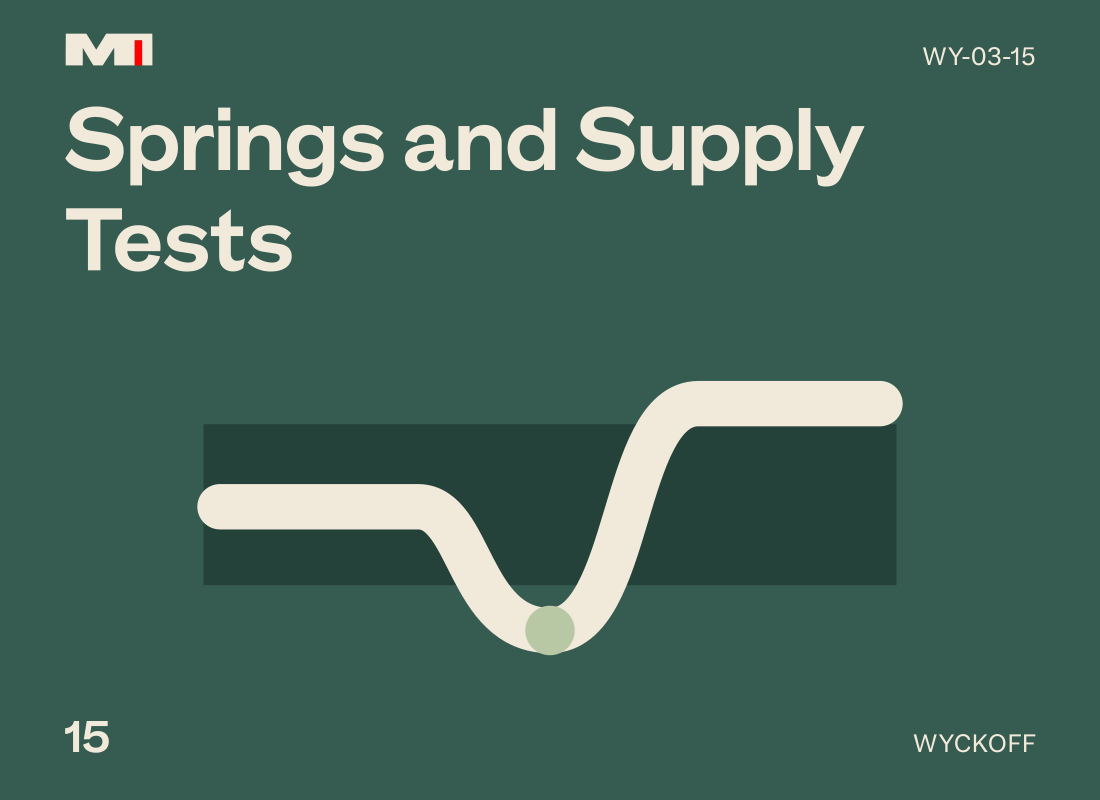
Phase C: Springs and Supply Tests