Lesson / WY-04-20
Phase E means price has left the distribution range. A breakdown establishes only that, at that moment, quotes and trading at the old lower boundary failed to stop falling. Existing participants can replace orders and new participants can enter. Each descent into a previously less-traded area creates new choices: shorts may cover for profit, former longs may buy because prices look cheap, and sellers must keep accepting lower bids. The downtrend continues only if selling at new levels still lowers price and rallies cannot regain the main losses. The task shifts from guessing departure direction to assessing successive lower highs and lows, whether declines are smoother than rallies, whether the old lower boundary restrains rallies, and whether new lows recover quickly.
Course content is for learning and research only. It is not investment advice.
Read the Chapter ↗Timestamps
7 lessons · Chapter contents
01The Analytical Task of Phase D↗02Sign of Weakness: SOW↗03Last Point of Supply: LPSY↗04Symmetric Comparison of Downward Progress and Rally Quality↗05Rallying Back After a Support Break and Regaining the Range↗06Monitoring the Trend in Phase E↗07Consolidations, Rallies, and Candidate Redistribution During a Decline↗Observe the market: start with context and place price within its structure.
Understand structure: compare supply and demand, and let evidence support or revise your hypothesis.
Form a view: define risk limits and know when to reassess.
No matching captions.
The Distribution Structure and Phase A
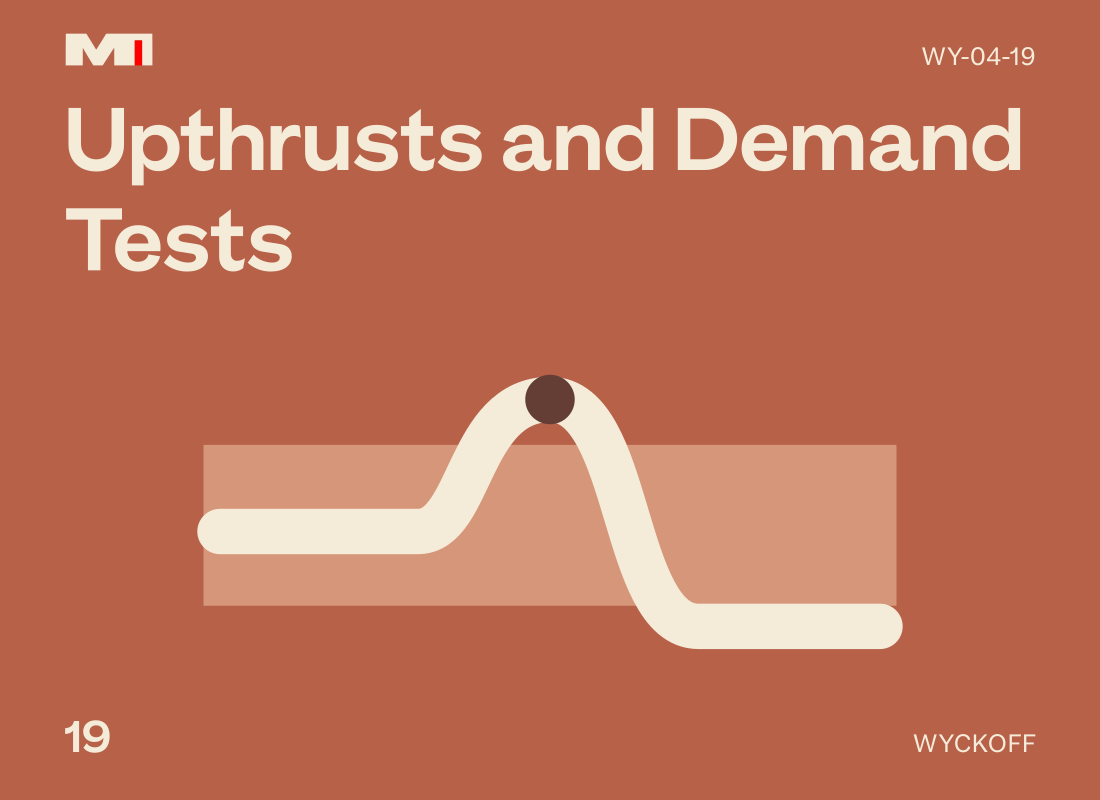
Phases B and C: Upthrusts, UTAD, and Demand Tests