WY-02-10
From Single Candlesticks to Swing Comparisons
Price & Volume
Sam Rivera
Full Chapters / WY-02-10
In this course, a swing is sustained price movement from one identifiable turning endpoint to another on a selected observation scale. It is neither a fixed number of bars nor every small retracement. Define purpose and scale before segmenting: the structural timeframe identifies major trends and ranges, the trading timeframe compares tradable advances and reactions, and the entry timeframe describes local triggers only. Changing scale changes endpoints and the number of swings.
The course video is not yet available. This interface demo uses a separate MT animation, not the lesson video.
Read the Chapter ↗Demo timestamps
7 lessons · Chapter contents
01Swing Segmentation Rules and Observation Scale↗02Identifying Upward and Downward Swings↗03Magnitude, Duration, Volume, and Progress Efficiency↗04Comparing the Current Advance with the Previous Advance↗05Comparing the Current Decline with the Previous Decline↗06The Relationship between Advances and Reactions↗07Endpoint Confirmation, Future Information, and Repainting↗The course transcript will be available with the finished video. The captions below belong to the interface demo.
Observe the market: start with context and place price within its structure.
Understand structure: compare supply and demand, and let evidence support or revise your hypothesis.
Form a view: define risk limits and know when to reassess.
No matching captions.
A Fresh Look at a Single Candlestick
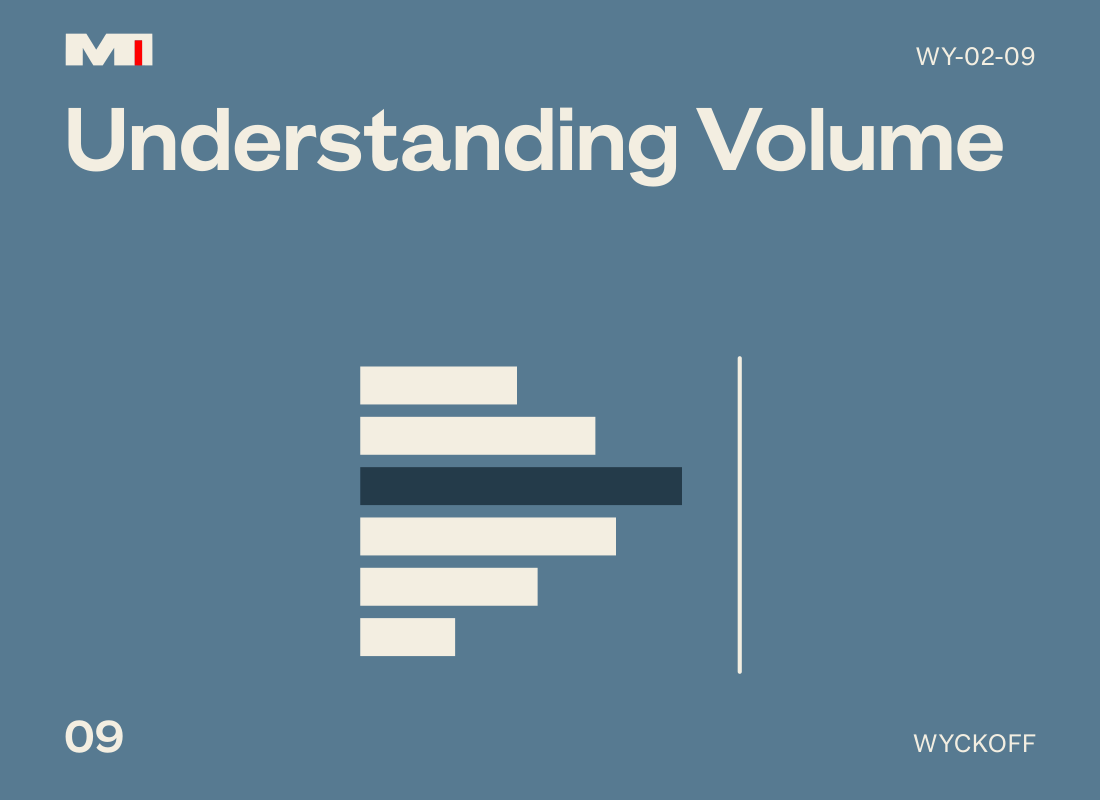
Understanding Volume